Best Anchor Stocks has a partnership with Fiscal.ai (the research platform I personally use), through which you can enjoy a 15% discount on any plan. Use this link to claim yours! You’ll find KPIs, Copilot (a ChatGPT focused on finance) and the best UX:

You can read this article (almost) entirely for free. If you like what you read, consider becoming a paid member to get access to…
All in-depth reports (16 companies profiled thus far, and growing)
Earnings follow-ups
Other investment related content
A community of like-minded investors
Complete access to my portfolio and transactions
Occasional webinars
You’ll also get access to the 30+ page detailed report on the robotics industry.
The in-depth reports of Stevanato and Deere are also free to read to gauge the quality of the research.
Join today:
There was a pretty relevant event this week regarding the AI trade, one that has never happened before but which rhymes with other well-known events in financial markets (shocker). I discuss it in the market overview section and also share plenty of company-specific news at the end.
Without further ado, let’s get on with it.
Articles of the week (and the hectic week ahead)
I published two articles this week. The first one was Eurofins’ earnings digest.
Food for the bulls, food for the bears

(Eurofins is a company I profiled in May 2026. You can find the in-depth report here.)
The company reported good earnings marked by a very clear highlight, and a very clear lowlight.
The second article of the week was Danaher’s earnings analysis.
This business can always surprise you

Danaher reported a pretty “interesting” quarter last week. Despite relatively strong earnings (top line in-line and beating EPS), the stock dropped 15% the day of the release. Now, in an unexpected turn of events
The company reported okay earnings last week, but the movement of the different segments did not particularly excite the markets. In an interesting turn of events, the stock reacted more positively to the earnings of competitors than to its own earnings.
Next week is a pretty hectic week for the Best Anchor Stocks portfolio; 5 companies are reporting (which may well account for more than 40% of my portfolio). The goal is to bring articles for all, but I’ll prioritize for next week those that I deem more important/relevant.
I have also begun reading about an interesting company that might potentially make it into the portfolio. I still have to do a tad more work but I’ll keep you posted.
Without further ado, let’s see what the markets did this week.
Market Overview
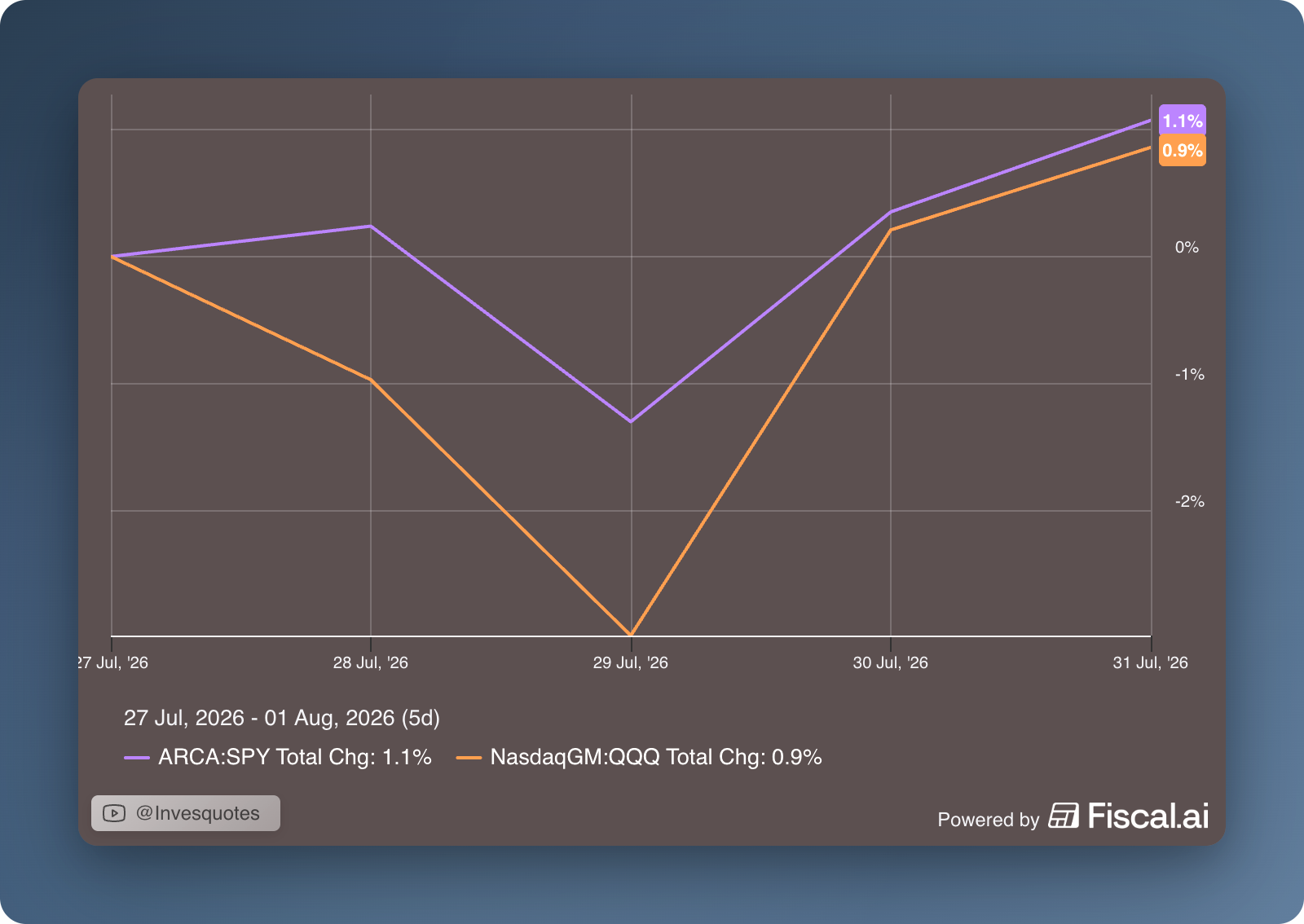
Both indices were up this week, and both by a similar amount:
I wanted to use this NOTW to write about a topic that has made the headlines this week. If you’ve kept up with financial markets, you might have heard that the Situational Awareness LP fund (aka. SALP) blew up this week. The backstory is actually quite interesting and should remind investors that there’s much more to this “game” than being occasionally right. We were once again reminded that “history doesn’t repeat but often rhymes”.
Let’s go back to June 2024, when Leopold Aschenbrenner published a 165-page “report” called Situational Awareness: The Decade Ahead. He had just been fired from OpenAI over what the company claimed to be “improper disclosure of internal information” and had had a stint at Sam Bankman-Fried’s FTX Future Fund Philanthropy. The red flags had started to appear, but there was nothing that could be considered too worrying. The essay is a very good read and I recommend reading it, but let me bring the conclusion here: AI would change the world and things were going to advance pretty fast, making AGI potentially possible by 2027. Leopold had high conviction that this would require an unprecedented AI buildout and, with the benefit of hindsight (and knowing that hyperscalers are tracking to invest more than a $1 trillion in Capex next year), we can say that he was right.
Driven by growing investor interest in the AI theme, he decided to capitalize on the essay by launching a fund. By July 2024 (barely a month after releasing the essay) Leopold had reportedly raised more than $225 million; Situational Awareness LP had just been born! Let’s not forget that he was doing this at 25 years old and with no prior trading/investment experience. Things did not look well on the surface (there were several “yikes”), but the reality is that Leopold began by proving naysayers wrong. He concentrated his book around AI-infrastructure names (duh) and was at one point generating more than 1,000% gains since inception (in just under two years). Before the drawdown that (spoiler alert) took the fund down, SALP had generated 400% returns thus far in 2026! Of course, hot returns acted like a gravitational force on AUM (Assets Under Management), helping the fund peak at $45 billion in AUM in July 2026. I don’t know if there’s ever been such a meteoric rise in such a short period of time, but in the stock market, meteoric rises tend to end (almost always) with meteoric falls. This time would be no different.
Leopold did a lot of things right. He was right on his fundamental thesis, he was successful in translating his conviction into AUM, and generated outstanding returns. BUT (there’s always a BUT), he made one crucial mistake (which also explains his outstanding returns to a great extent): he used too much leverage. July was not a great month for the “AI-trade,” and what’s not a good month on the surface for non-leveraged investors can quickly become a terrible month for leveraged degenerates. With SALP’s core positions dropping >35% during July, leverage forced SALP to liquidate its book, selling it pretty much entirely to Citadel.
Just after SALP blew up, what were its core positions all “sky-rocketted”, netting very nice gains for Citadel which reportedly started to unload the positions during the week. There’s a very important lesson in all of this: no matter how right you are on a thesis, you need to remain solvent to be able to actually capitalize on it. Leopold did something incredible, but he maximized short-term returns over durability, which led to a blow up, a tale as old as time on Wall Street. If you’ve not read the book “Long Term Capital Management” you should, because it clearly portrays that risk management is extremely important in this business.
Now, all this said, kudos to Leopold, he has probably made enough money to retire at age 27, but he did not make the money while adequately stewarding his shareholder’s capital. Be careful what heroes you choose in this business because a lot of them might be temporary, driven by the never-ending quest to become rich quickly. Oh, and it’s absolutely fine to dunk on people like this by the way, as they introduce very dangerous behaviour to financial markets and can do a lot of harm.
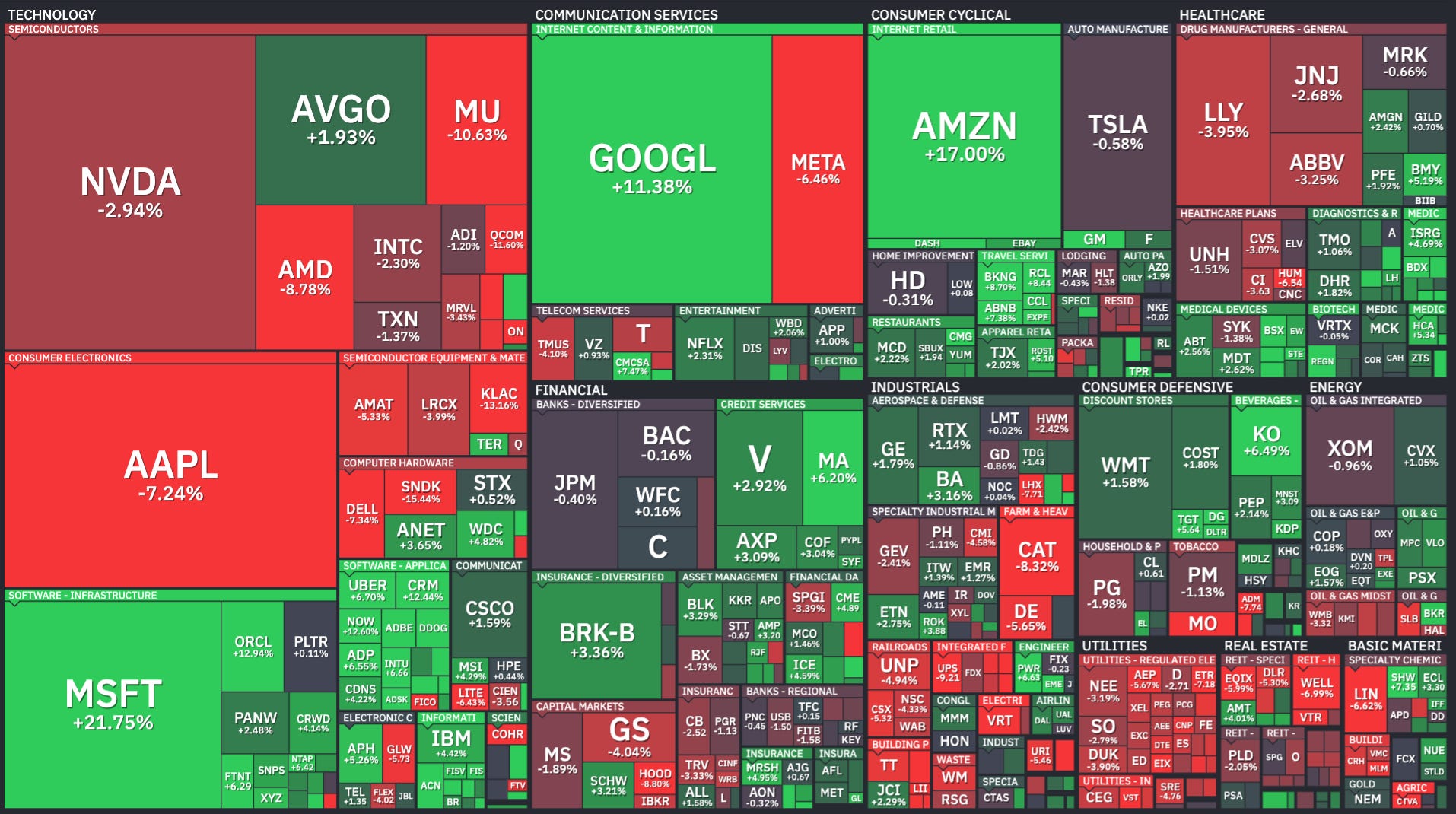
The industry map was mixed this week and characterized by the hyperscalers (GOOG, MSFT, and AMZN) getting some love. Meta continued to fall behind:
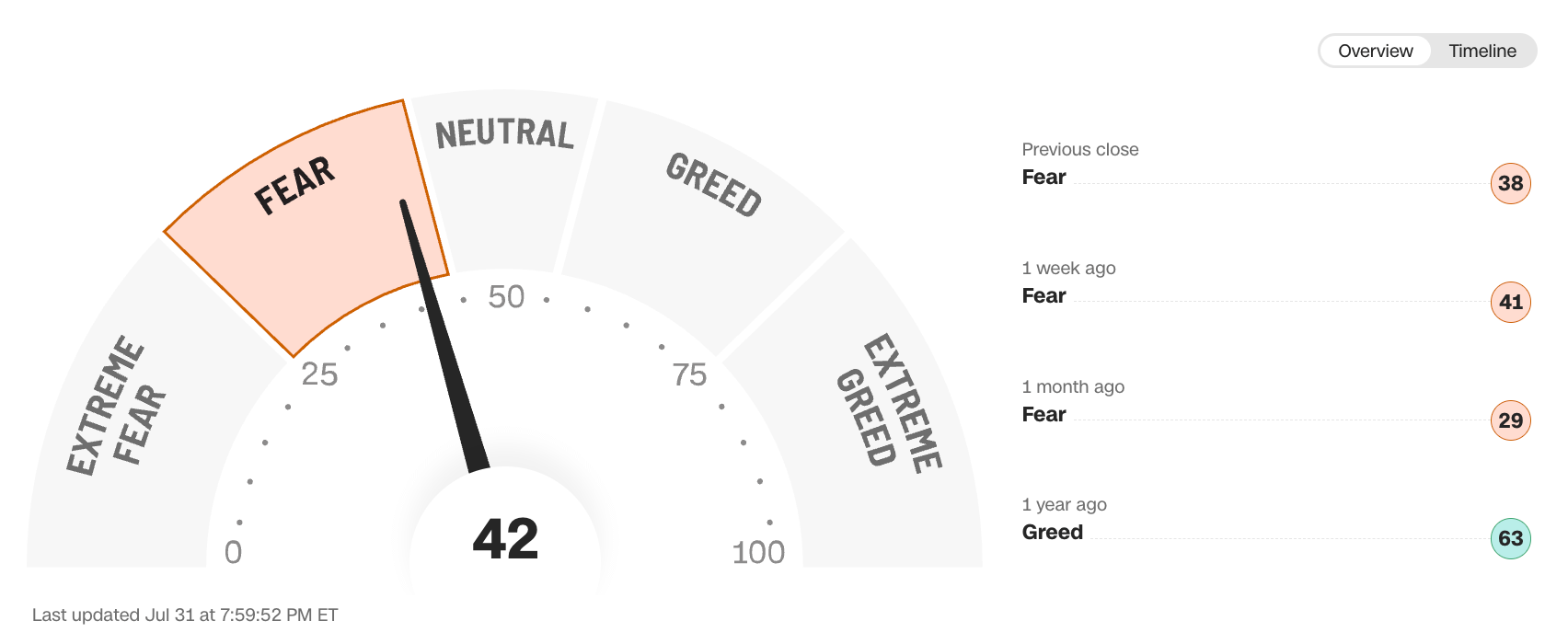
The fear and greed index improved slightly but remained in fear territory: