Best Anchor Stocks has a partnership with Fiscal.ai (the research platform I personally use), through which you can enjoy a 15% discount on any plan. Use this link to claim yours! You’ll find KPIs, Copilot (a ChatGPT focused on finance) and the best UX:

You can read this article (almost) entirely for free. If you like what you read, consider becoming a paid member to get access to…
All in-depth reports (15 companies profiled thus far, and growing)
Earnings follow-ups
Other investment related content
A community of like-minded investors
Complete access to my portfolio and transactions
Occasional webinars
The in-depth reports of Stevanato and Deere are free to read to gauge the quality of the research.
Join today:
I also wanted to thank everyone who makes this project possible. The KPIs for Best Anchor Stocks are looking good. ARR is up almost 60% YoY with free readers up 20% YoY:

Thank you!
It was an interesting week in the market as the AI trade began to show some cracks. I discuss why I believe there were additional signs of exuberance this week and why the game of investing is so tough.
Let’s begin with some in-house news.
More improvements to the PMT (Portfolio Management Tool)
Last week, I unveiled the Portfolio Management Tool; a dashboard app for Best Anchor Stocks that I had been working on for a while. Last week, the tool included the following:
A risk/IRR matrix to understand at a glance how the portfolio is positioned and to help an investor maximize the portfolio’s risk-adjusted return
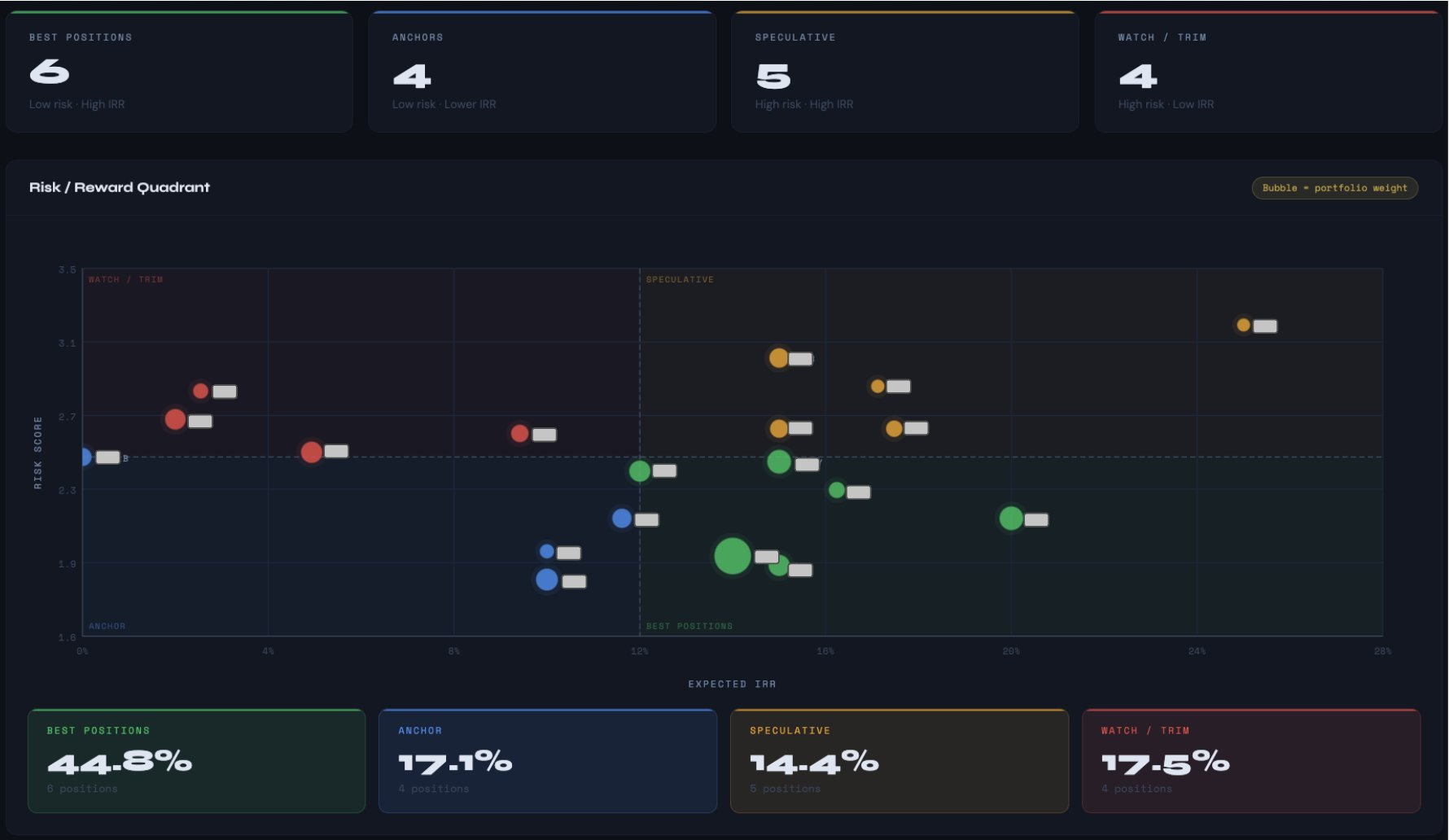
My portfolio with weights, returns…
A transaction log that includes all the transactions and the activity over the last 3 months
The portfolio’s industry and factor exposure
The watchlist and how it’s evolving
An event calendar with all the relevant events for the portfolio companies
I’ve added a couple of new features:
A portfolio news tab that will be updated weekly with the relevant news for portfolio companies. News come from two sources: AI generated and from the NOTW I publish every week (there’s a tag to show which one is which!)
An “On the radar” tab where I share all the companies featured on my on the radar series with their respective returns. The goal is to see these businesses drop as for one reason or another, most don’t make it into the portfolio initially
I’ve added more valuation models
I expect to continue to iterate on the tool over the coming weeks/months but I’d say it’s looking pretty good thus far!
Articles of the week
I published one article this week: the fourth issue of “On The Radar.”

I bring 3 new interesting companies to watch out for:
A Swiss industrial with a leading position in a key product in the data center buildout (who knows if the current AI-downturn will bring it back to interesting territory)
A cybersecurity company with defensible competitive advantages (and that has positive GAAP earnings!)
A rather special serial acquirer (you probably don’t expect the name) with a great track record and in a defensible industry
The goal of the “On The Radar” series is to find interesting businesses that make it into the watchlist and (potentially) the portfolio. Out of the 12 companies I’ve profiled so far in the series, one has made it into the portfolio, and with good results thus far.

I also found it interesting that the series is resonating with subscribers because it brings a diverse set of US and non-US businesses to the table. This is what a subscriber told me this week:
Just wanted to say thanks for both doing the work on Eurofins, but also identifying other ex-US stocks such as TBBB or the other firms you’ve mentioned “on the radar.” Many of us domiciled in the US have too much concentration in US stocks, and I for one would like to learn more about good companies outside the US. We’re getting better data on international companies these days, but learning about a company’s culture, management team and other qualitative characteristics can be more difficult. Appreciate the efforts you’re making in this area!
The next in-depth report (not what you think probably)
I am currently working on a comprehensive article about the next technological frontier which I expect to publish soon. The article will explain what this frontier is and will bring a comprehensive list of companies involved (that I believe are interesting).
I continue looking for new companies to add to the portfolio, and even though I am looking at a lot every week, I’m struggling to find anything interesting right now. The same was happening before I published my Eurofins and Rosebank reports in a short period of time, so stay tuned.
Without further ado, let’s see what the markets did this week.
Market Overview
It seems that last week’s NOTW titled “10 signs of exuberance” was quite prescient: both indices dropped significantly this week as money fled the AI trade:
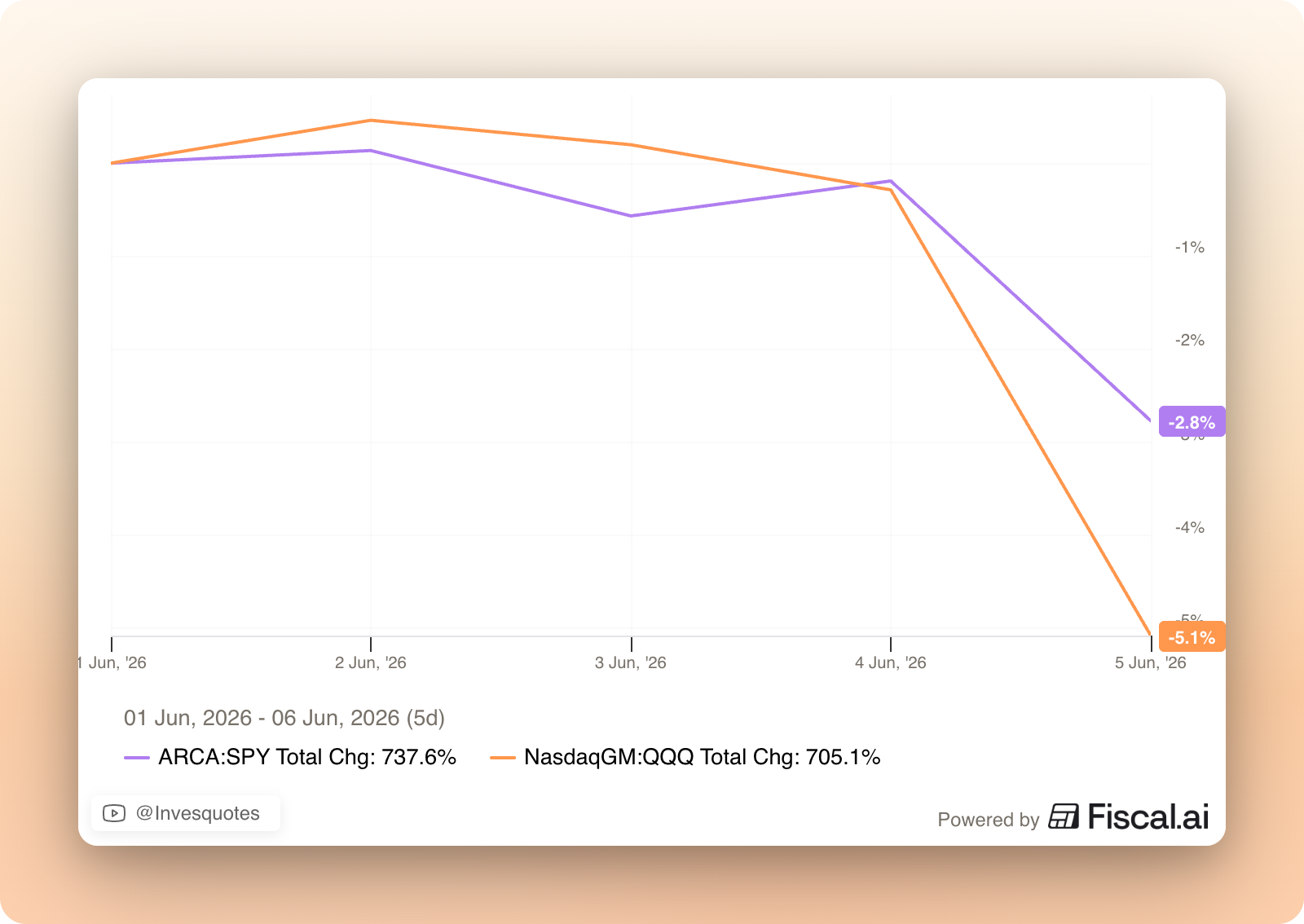
Now, before victory-lapping anything, let’s admit that this drop means ultimately nothing. I mean, both the S&P and the Nasdaq are still up considerably YTD and we know (as a fact) that 5%-10% corrections happen quite regularly in financial markets. In short: this might just be a bump along the road rather than the start of a major crash (this is almost always the case!). I am not a permabear, by the way, but that doesn’t get in the way of trying to be rational. It’s pretty obvious that many things (high beta names and bottlenecks) were quite over-extended.
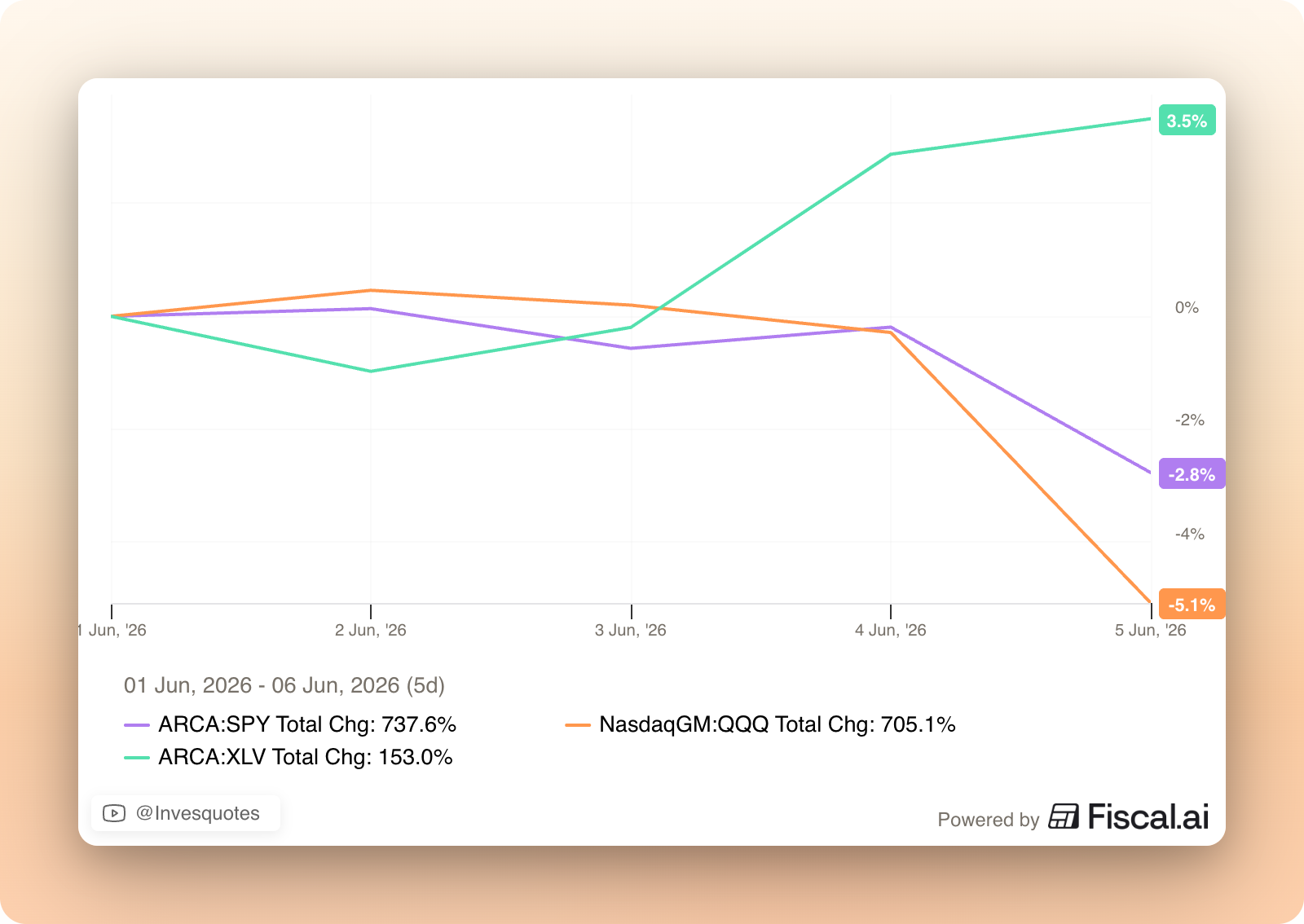
Despite being significantly diversified across factors and industries, the Best Anchor Stock portfolio has shown good outperformance as soon as trouble started to hit the indices/AI-trade. I believe the portfolio is still pretty cheap and that it should do very well from here regardless of what the AI trade decides to do, but it’s definitely overexposed to healthcare, which is starting to do well (we’ll see how long it lasts!). Healthcare showed an >800 bps outperformance against the Nasdaq this week:
One might think: why not be 100% healthcare if you believe in your thesis? Well, I believe the future is unknowable and being diversified makes sense. Is this strategy of being diversified across factors going to maximize the return of your portfolio? Probably not, but it’ll likely maximize my risk-adjusted return. I could argue (likewise) that the start of the year would’ve been pretty harsh if I had not owned anything in semis/AI.
I believe Friday’s drop surfaced other signs of exuberance. These portrayed that many are not prepared for what might come (because it’s always a possibility that a crash of factor rotation is round the corner). Many claimed that, if you were not down 5% on Friday, “you are a loser.” Even though I get the premise of this claim (i.e., you are probably not exposed to all the things that have skyrocketed in the past few months), I must say that what it actually portrays is that many still believe that they can’t lose. I think this is a very dangerous thing to believe in financial markets.
Yet another sign of exuberance could be found in screenshots. Screenshots did not show great performance but rather people “flexing” by how much they were down (weird flex). If your portfolio was down 20%+ yesterday (I’ve seen plenty of cases) then you are probably not going to make it. Yes, you are going to make a lot of money on the way up by being leveraged long 3-5 semiconductor/bottleneck companies, but the downfall will most likely be quite violent.
I’ve always viewed investing as a “game” in which one must survive over the long-term to reap the benefits of compounding (i.e., one needs to stay in the game). Now, the game is tough because it requires a balancing act; it all comes down to trying to maximize returns while not blowing up. Sounds easy, but there are two sides of the spectrum, and neither of them are great:
Maximizing for return too much so that you end up blowing up
Diversifying and being extra-safe so that you end up surviving but with subpar returns
Investing is a game of assuming risk. Yes, a game of assuming the appropriate level of risk, the amount of risk that you are being compensated for, but nevertheless risk. Go to too-safe territory and you might end up with poor returns; go to to- risky territory and you might end up blowing up. Balance is key although attention tends to flow to those people who end up blowing up (someone will take their spot eventually).
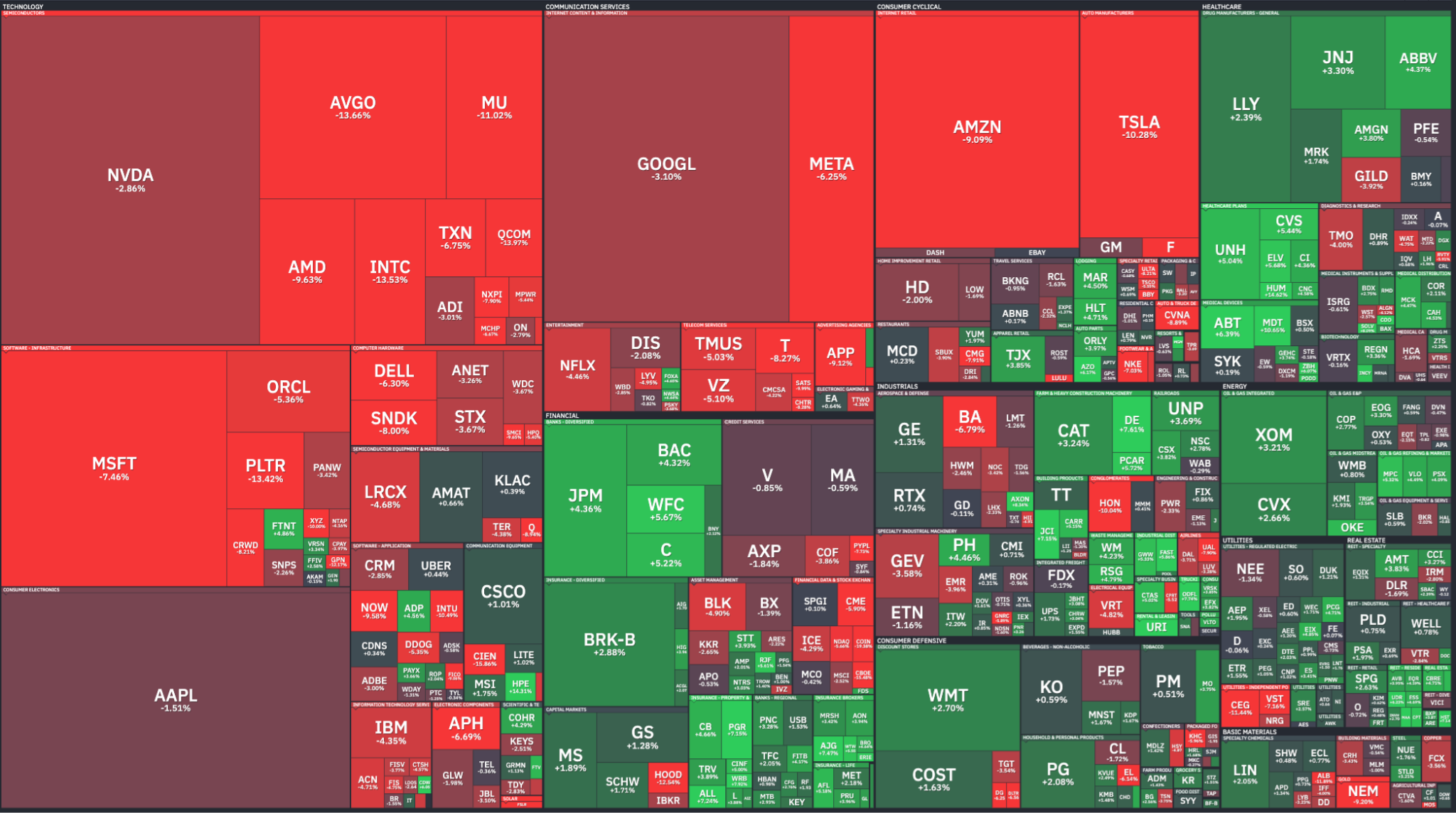
The industry map was pretty much a sea of red this week with the exception of healthcare and other defensive industries:
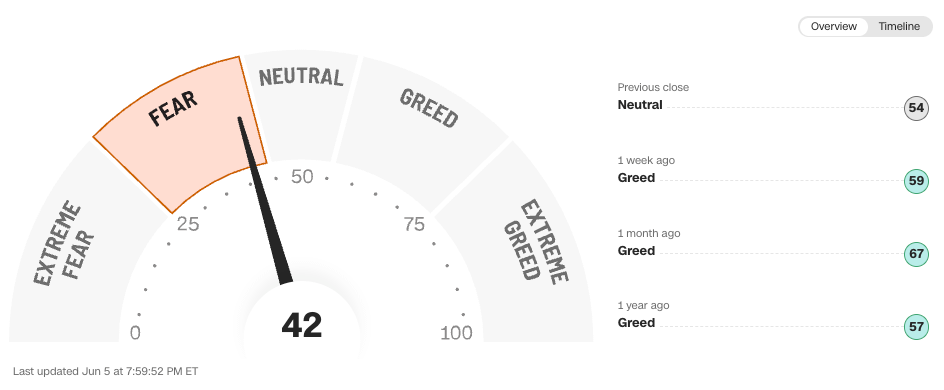
The fear and greed index dropped considerably and went from greed to fear inside a week: