Best Anchor Stocks has a partnership with Fiscal.ai (the research platform I personally use), through which you can enjoy a 15% discount on any plan. Use this link to claim yours! You’ll find KPIs, Copilot (a ChatGPT focused on finance) and the best UX:

You can read this article (almost) entirely for free. If you like what you read, consider becoming a paid member to get access to…
All in-depth reports (16 companies profiled thus far, and growing)
Earnings follow-ups
Other investment related content
A community of like-minded investors
Complete access to my portfolio and transactions
Occasional webinars
You’ll also get access to the 30+ page detailed report on the robotics industry.
The in-depth reports of Stevanato and Deere are also free to read to gauge the quality of the research. Other in-depth reports have been written about…
Deere (DE)
FRP Holdings (FRPH)
Five Below (FIVE)
Diageo (DEO)
Hermès (HESAY)
Atlas Copco (ATCO.B)
Stevanato (STVN)
Keysight (KEYS)
Zoetis (ZTS)
Judges Scientific (JDG.L)
Medpace (MEDP)
Trupanion (TRUP)
AAON (AAON)
BBB Foods (TBBB)
Eurofins (EPA.ERF)
Sabre (SABR)
Rosebank Industries (ROSE.L)
Undisclosed position
Undisclosed position
Join today:
Markets were up during a week very few expected it to be up (surprise?). There were plenty of what many would consider relevant or significant news for financial markets, but markets seemed to climb a wall of worry once again.
The new in-depth report
This week I published another in-depth report. This time, I travelled to Japan to discuss a company…
Growing at a 40% clip and expects to do so in the coming years
That has a minor market share in a large and growing market
Insiders own 50%+ of the outstanding shares
Is trading at 11x EV/EBIT
(NEW REPORT) The Scarcity Premium

(Paid subscribers can find this report in PDF version and the valuation model after the paywall)
I know it sounds too good to be true, but the reason why I started a position is that I don’t agree with the market’s perception on this one and therefore I believe the risk-reward is heavily skewed in an investor’s favor.
Second Japanese company to make it into the portfolio.
10,000!
This week Best Anchor Stocks reached 10,000 subscribers on Substack!
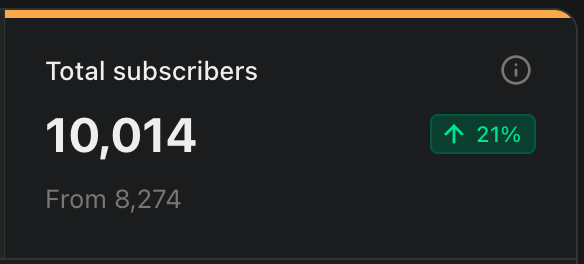
It has been a long and entertaining journey to get here, but thank you all for trusting this project. It will only get better from here!
As a thank you token for the 10,000 subscribers, I have decided to give out 10 annual subscriptions at a 30% discount. The discount will end as soon as the 10 spots get filled.
The subscription will give you access to all past in-depth reports (including the most recent one) and all of what’s coming (which is plenty!).
I believe the companies outlined in the last 5 in-depth reports remain attractive despite some having run up significantly since I published the report:
Tiendas 3B (TBBB)
Eurofins (EPA:ERF)
Rosebank Industries (LON:ROSE)
Undisclosed (a Canadian company)
Undisclosed (a Japanese company)
You can sign using the link below:
Without further ado, let’s see what the markets did this week.
Market Overview
It was a pretty interesting week in financial markets because we had a bit of “everything” and plenty of what many would consider critical news for financial markets. Just like last week, both indices finished in positive territory, but not without their fair share of volatility:
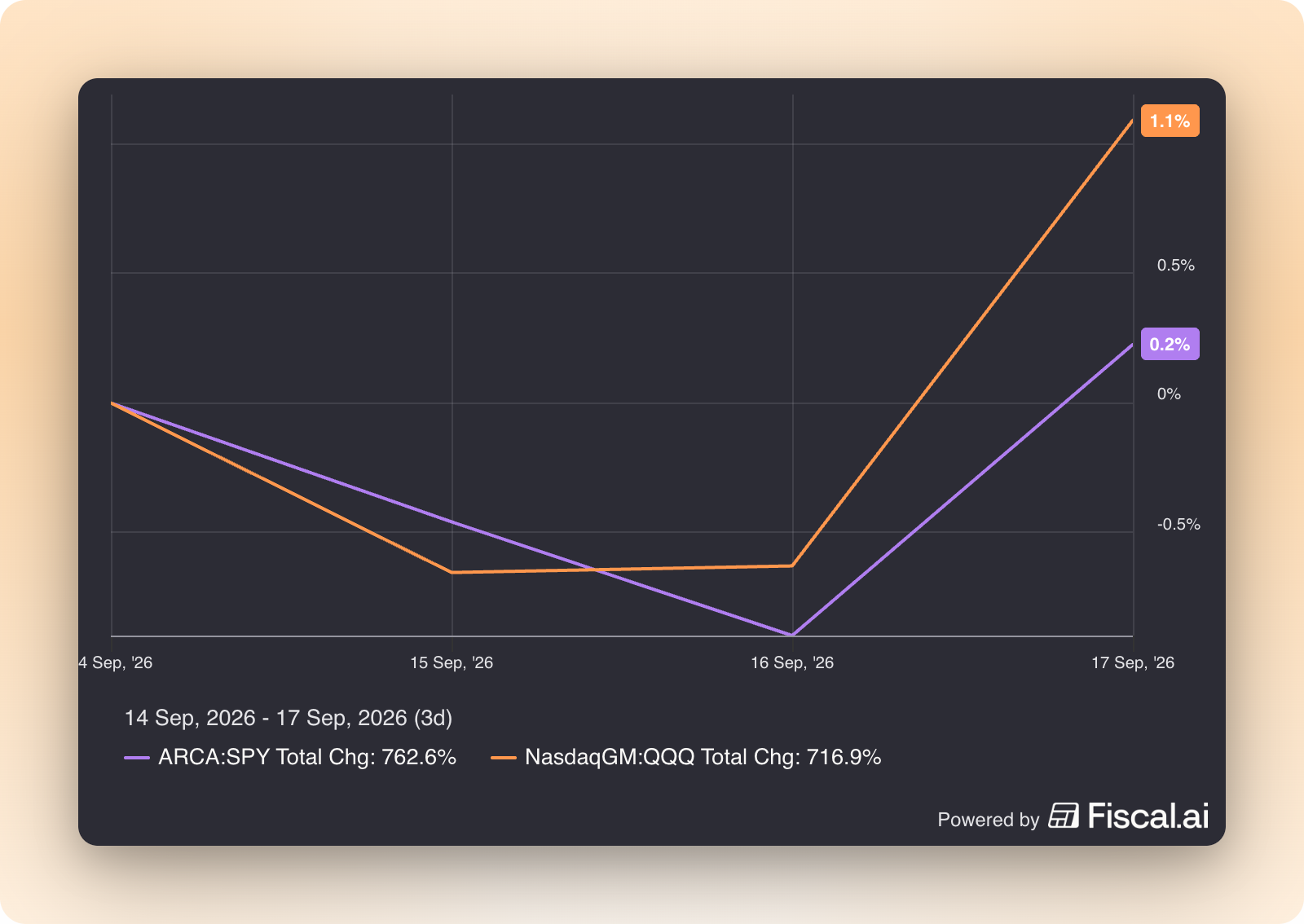
And like pretty much always, financial markets demonstrated that they are pretty much impossible to forecast. The Federal Reserve raised rates for the first time since 2023 (expected) and the commentary was pretty hawkish (maybe not as expected): 16 out of 18 members believe that there’s space to do one more interest rate hike this year.
Treasury yields climbed above 5% throughout the week, which together with oil above $100, formed a “perfect cocktail” for an end-of-day selloff on Wednesday. Many claimed that the selloff was logical, but in an expected (not a typo) turn of events, markets ended up in very green territory on Thursday and ended up on a positive note on Friday! So, is/was everything “priced in”? The “priced in” question is always an interesting one because despite many claiming that “x”, “y”, or “z” is priced in, it’s ultimately impossible to really know what’s in the numbers (directionally one can more or less have an idea). The reason is pretty straightforward: there are too many variables playing a role in financial markets. Of course people will tell you they knew what was coming after the fact while not promoting their mistakes, but if the inflation era portrayed something is that most “macro experts” don’t really have a more informed opinion than the average market participant.
We had a rumor this week that, in my opinion, is “terrible” for the well-being of long-term investors: US markets might expand trading hours to 23 hours a day:


Let me share some of my thoughts around this. The first and quickest one is:
Should I care as a long term investor?
The reality is that long term investors shouldn’t really care, but then at the same time it’s easier to avoid getting carried away by financial asset prices when the market is closed (this is a fact). No matter how long-term oriented you are, asset prices and volatility can influence your decision making (and being aware of this is important). All this said, I do believe it shouldn’t change one thing if you are long-term oriented: you’ll likely get more “bumps” along the way (volatility), but the destination shouldn’t change.
The second thought that comes to my mind is that this may be massively bullish for companies like Interactive Brokers (IBKR)? IBKR is (uncoincidentally) one of my biggest mistakes of omission. Incentives are very powerful and there are plenty of market participants with an incentive to lengthen market hours. All the intermediaries benefit and everyone is happy because it’s done in the “name of liquidity!” The market is simply transforming itself into a casino (not that it wasn’t before), which is interesting considering that people used to believe that markets would get more efficient over time. My contrarian thought is that markets are becoming less efficient over time (for long term investors that is) because they are becoming flooded with information and “quick” and violent trading. This doesn’t mean that they are always inefficient, but it does seem like stock prices move faster every year whereas businesses do not to the same extent. I recommend reading the intro to my recent in-depth report where I discuss this topic because I consider the company to be one of said mispricings.
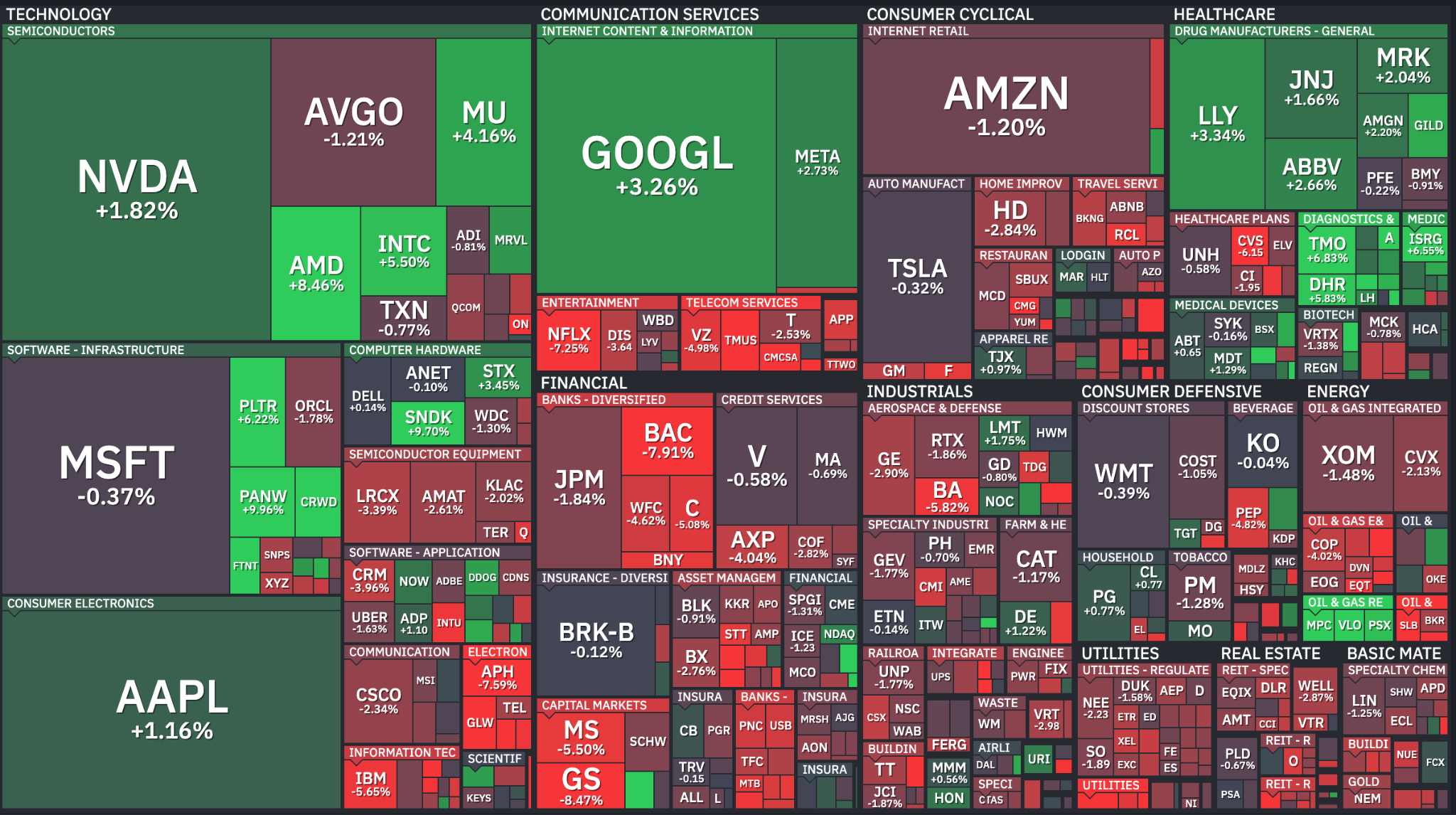
The industry map was mixed this week, with semis doing pretty well despite the higher rate environment:
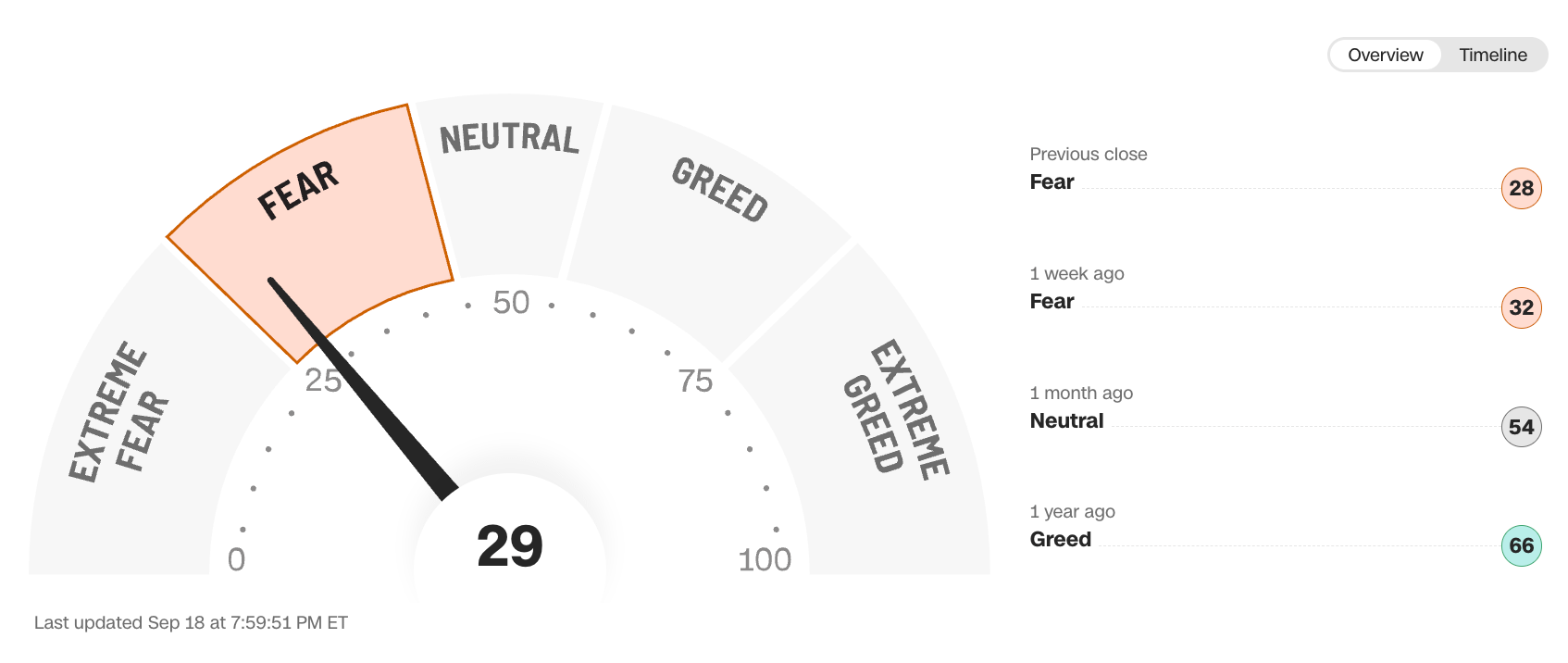
The fear and greed index worsened a bit: